
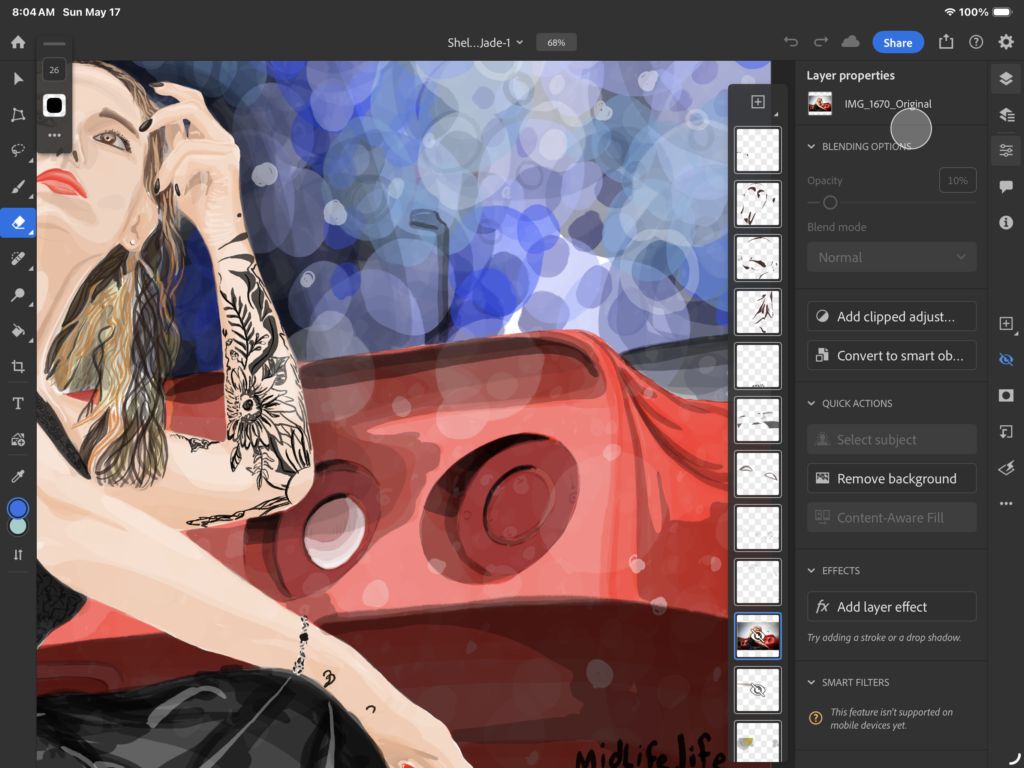
There’s a strange comfort in unfinished work.
An unfinished photograph can still become brilliant someday. An unfinished design still carries potential. An unfinished idea still lives in a protected space where nobody can reject it.
The moment you finish something, though, the relationship changes. Now it can be judged. That’s the part people don’t talk about enough. Not the mechanics of creativity.
Not the tools. Not the workflow hacks. The vulnerability.
Because finishing requires a quiet kind of courage. The willingness to say:
This is what I saw.
This is what I made.
This is the best I could do with the time, skill, clarity, and energy I had.
That can feel terrifying.
I’ve watched incredibly talented people overcomplicate beautiful ideas until they collapse under their own weight. Too much polishing. Too much second-guessing. Too many voices trying to optimize something that was already honest.
Eventually the work stops breathing.
Somewhere along the way, creativity became confused with perfection.
But most meaningful work is imperfect.
A photograph catches the wrong reflection.
A sentence lands a little rough.
A design system has seams if you look close enough.
A presentation misses a transition.
A film shot has grain where digital perfection wanted smoothness.
And yet sometimes those are the very things that make the work feel human.
I think about this often when I’m editing photos late at night. The room is quiet except for the soft clicking of keys and the hum of hard drives. You zoom in too far. Adjust details nobody else will ever notice. Chase some invisible standard that keeps moving further away the closer you get to it.
Eventually you realize the real skill is not perfection.
It’s discernment.
Knowing when the work says what it needs to say.
Then letting it go.
That’s harder than people think.
Especially now.
We live in an era that rewards endless commentary. Endless refinement. Endless reaction. Social platforms train us to compare unfinished drafts of ourselves against polished versions of everyone else. And because of that, a lot of people stop shipping entirely. The irony is that momentum rarely comes from brilliance alone.
It comes from finishing.
From building the muscle memory of completion.
You finish the draft.
You publish the photo series.
You launch the portfolio.
You share the idea in the meeting.
You make the thing.
Then you make another.
And another.
Talent matters, sure. Experience matters too. Standards matter. Process matters. Good tools help. Clear thinking helps.
But momentum belongs to people willing to move.
Some of the best creatives I know are not the loudest people in the room. They’re not performing genius all day like some black-turtleneck caricature from a movie.
They’re builders.
Calm. Consistent. Observant.
They finish things.
And maybe that’s the real creative discipline.
Not perfection.
Completion.
Trusting your gut enough to release the work before fear convinces you to bury it.
Because unfinished ideas may feel emotionally safe.
But finished work is what actually changes people.